
A “$999 implant” ad in Houston can turn into a several-thousand-dollar problem if it leaves out planning, parts, or follow-up care. When researching cheap dental implants Houston, many patients focus on the price first, but that can be misleading.
If you are comparing cheap dental implants, the safest move is to separate a low sticker price from real value, then look for the steps that protect long-term success.
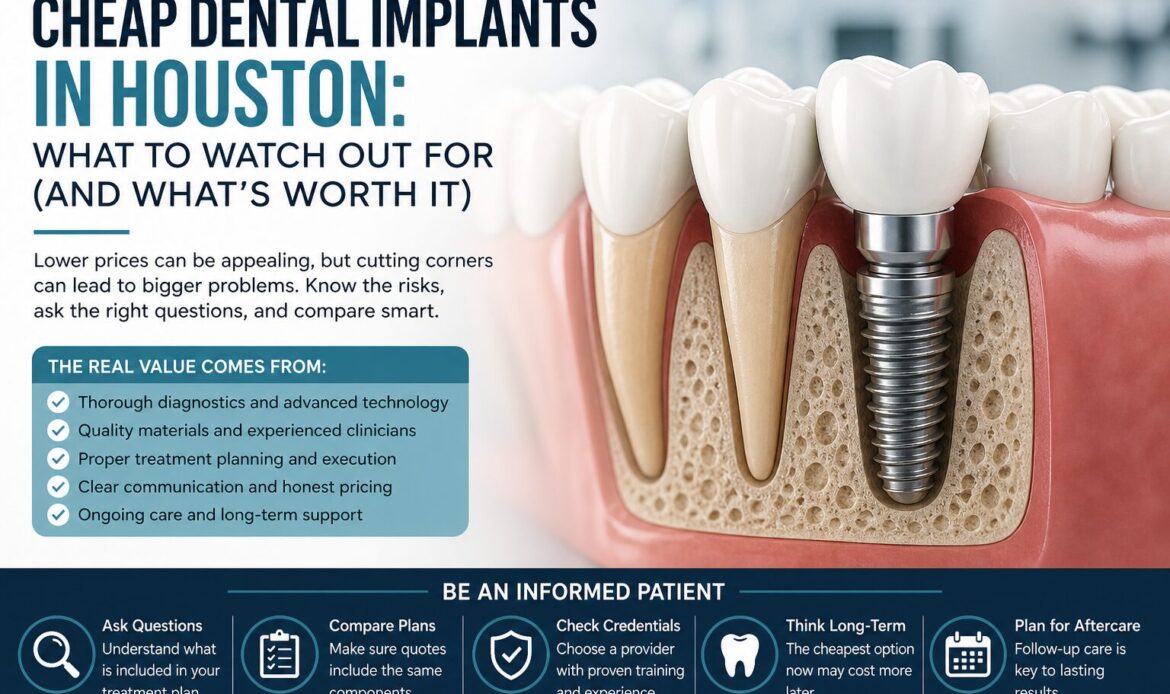
Why “Cheap” Dental Implants Can Get Expensive Fast
A dental implant is not one product you buy off a shelf.
Success depends on the full tooth implant process: treatment planning, surgery, implant materials, the final tooth, and a maintenance schedule that keeps bacteria buildup under control.
The common pattern looks like this: bargain pricing upfront, then hidden fees and complications later.
When an implant fails or becomes infected, revision surgery can cost more than doing it right the first time, and it can also mean more time without a stable tooth.
Affordable dental implants can be safe.
Cheap dental implants often signal shortcuts, missing steps, or unclear responsibility if something goes wrong.
Cost vs. Value: What You’re Actually Paying For
Most implant treatment has phases, and each phase affects the outcome.
A typical plan includes consultation, imaging, digital treatment plan, surgical placement of the implant fixture, the abutment, the dental crown, and follow-up visits.
Precision matters because implants are measured in millimeters.
A small angle error can make the crown harder to clean, increase bite stress, and raise dental implant risks like bone loss over time.
Quality components also matter for longevity.
Many patients do well for decades with titanium dental implants and a reliable implant system, while low-quality parts can loosen, fracture, or become difficult to service.
Red Flags in Houston Ads and Promotions
Be cautious with “$X implant” offers that only include the implant fixture.
Many ads exclude the abutment and crown, CBCT scan, 3D imaging, bone grafting, sedation, and post-op care, which is where costs add up.
High-pressure limited-time deals are another warning sign.
Implants are elective surgery, and you should have time to review an itemized treatment plan, ask about warranty terms, and consider a second opinion.
Vague claims like “premium implant” without naming the implant system brand are also a red flag.
If the office cannot tell you what components they use, you may be dealing with no-name implant brands or limited parts availability later.
The Biggest Things to Avoid When Shopping for Low-Cost Implants
Most “cheap” implant problems come from missing steps, not just lower profit margins. This happens most often when patients choose cheap dental implants Houston options without fully understanding what is included.
Shortcuts often show up as skipped diagnostics, rushed placement, low-quality implant materials, and minimal aftercare.
Each shortcut ties to a real risk.
Infection, failed osseointegration, nerve damage, gum disease flare-ups, and progressive bone loss are more likely when planning and follow-up are weak.
Skipping Diagnostics and Surgical Planning
Avoid clinics that quote a final price without a CBCT scan.
A CBCT scan provides 3D imaging that helps map bone volume, the position of the inferior alveolar nerve in the lower jaw, and sinus anatomy in the upper jaw.
Watch for signs the office is not doing real treatment planning.
If no one discusses bone thickness, sinus proximity, nerve mapping, or bite forces before giving a firm quote, you may be seeing skipped diagnostics.
A careful plan may also include a surgical guide.
A guide can improve accuracy and reduce surprises, especially in tight spaces or near the sinus.
Low-Quality Implant Materials and Unknown Brands
An implant system is more than the screw in the bone.
The connection between the implant fixture and abutment needs a precise fit to reduce micro-movement and help protect the surrounding bone and gum tissue.
No-name implant brands can create long-term headaches.
If you need a replacement screw, a new abutment, or repair years later, parts availability matters, and some off-brand systems become impossible to service.
Material quality also matters.
Most established systems use titanium dental implants with well-studied surface treatments to support osseointegration, while low-quality implant materials may have weaker quality control.
One-Size-Fits-All Treatment Plans
A red flag is when everyone gets the same plan, regardless of health history or anatomy. This is common with some cheap dental implants Houston offers that apply a one-size-fits-all approach.
Your bite, bone density, gum health, and habits like smoking or grinding can change the approach.
Some patients need extra steps for a stable result.
Bone grafting, a sinus lift, or soft tissue grafting may be necessary to support the implant and reduce future bone loss and inflammation.
If a clinic acts like those steps are never needed, that is not a good sign.
A realistic plan explains what is known now and what could change after imaging and evaluation.
Common Complications Linked to Cut-Rate Implant Treatment
The most common implant problems discussed by many dental sources include peri-implantitis, implant failure, and nerve or sinus complications. These risks are more likely when patients choose cheap dental implants Houston options without proper planning or follow-up care.
These issues are often preventable with proper planning, sterile technique, quality parts, and ongoing maintenance.
Knowing the early symptoms helps you act fast.
Small problems can become big problems if you wait, especially when infection starts to affect the bone around the implant.
Infection and Peri-Implantitis
Peri-implantitis is inflammation and infection around an implant.
Plaque and bacteria buildup usually drive this condition and can lead to bone loss around the implant fixture.
Poor follow-up care increases risk.
If you do not follow a clear maintenance schedule and attend regular cleanings, early inflammation may go unnoticed until the implant becomes loose.
Early warning signs to take seriously include:
- Bleeding when brushing or flossing around the implant
- Swelling or tenderness in the gum
- Bad taste or drainage
- A pocket that seems to be getting deeper
- A loosening sensation or a change in how the tooth bites
If you notice these signs, ask for an evaluation promptly.
Early treatment can sometimes stop progression before major bone loss occurs.
Implant Failure or Lack of Bone Integration
Osseointegration is the process where bone bonds to the implant surface.
For this to happen, the implant needs good stability, healthy bone, and the right healing time.
Cut-rate treatment may push timing too fast or place implants in less-than-ideal positions.
If the implant moves during healing, integration can fail, leading to implant failure and possible revision surgery.
Common risk factors include:
- Smoking and tobacco use
- Uncontrolled diabetes
- Teeth grinding or clenching
- Poor implant positioning that overloads the implant
- Untreated gum disease
A careful team screens for these risks early and adjusts the plan.
That may include treating gum disease first, using a night guard for bruxism, or staging treatment.
Nerve Damage and Sinus Issues
In the lower jaw, the inferior alveolar nerve runs through the bone.
In the upper jaw, the sinus can be close to the implant site, and some patients need a sinus lift to create safe space. These anatomical risks are often overlooked when choosing cheap dental implants Houston options without proper imaging.
CBCT planning helps reduce these risks.
It allows the clinician to measure bone height and width, choose the right implant length, and plan the angle before surgery.
Seek immediate evaluation if you have numbness, tingling, burning sensations, or persistent pain after implant surgery.
Some temporary changes can happen after procedures, but nerve symptoms should never be ignored.
What a Transparent, “Affordable” Implant Plan Should Include
A trustworthy quote makes it easy to compare apples to apples.
It names the components, lists what is included, and explains what could change if imaging shows the need for grafting or other procedures.
It also clearly explains the difference between the implant fixture, abutment, and crown.
When those pieces are excluded, patients often feel misled, even if the fine print technically allows it.
You should also be told what follow-up visits look like.
A good plan sets expectations for post-op checks, hygiene visits, and how the office monitors the implant over time.
Quote Checklist: Items That Are Often Excluded
Ask for an itemized treatment plan that lists each step and its fee.
This reduces hidden fees and makes it easier to compare two offices fairly.
Items commonly excluded from “cheap” offers include:
- CBCT scan and other imaging
- Digital treatment plan and planning time
- Surgical guide
- Tooth extraction, if needed
- Bone grafting materials and membranes
- Sinus lift, if needed
- Sedation and monitoring fees
- Antibiotics and other prescriptions
Restorative items often excluded include:
- Abutment
- Dental crown
- Temporary tooth or temporary denture
- Bite adjustments after delivery
- Post-op visits and long-term follow-up visits
- Warranty terms, what is covered, and what voids coverage
If a quote is not clear, ask for it in writing.
A reputable office will not hesitate to explain it.
Credentials and Team Roles That Matter
Dental implants can be done by different providers, and the team structure matters.
A general dentist may do planning and restoration, while a periodontist or oral surgeon may place the implant, and a prosthodontist may handle complex restorations.
Ask who places the implant and who restores it with the crown.
Also ask who manages complications, and whether you will be referred out if something goes wrong.
If you are considering a tooth replacement after an extraction, you may find it helpful to read about reasons patients choose implants after removing a tooth.
For a broader overview of options and timelines, this dental implant planning resource can help you understand what to expect at each stage
Houston-Specific Factors That Affect Price (Without Sacrificing Safety)
Houston has a wide range of implant pricing, especially when comparing cheap dental implants Houston options to more complete treatment plans.
Differences often come from technology like CBCT and guided surgery, lab quality, the complexity of your case, and whether the office is coordinating multiple specialists.
Overhead also varies by location.
A practice in a high-rent area may charge more, but a low price does not automatically mean better value if key steps are missing.
Compare like-for-like treatment plans.
Two quotes only make sense side by side when they include the same components and follow-up schedule.
Service Areas and Practical Follow-Up Logistics
Follow-up care is not optional with implants.
Easy access for post-op checks and cleanings reduces risk, because small issues can be caught early.
In Houston, patients often travel from The Heights, Midtown, Montrose, River Oaks, West University, Memorial, Galleria and Uptown, Sugar Land, Katy, Pearland, Cypress, Spring, and The Woodlands.
If you are driving far, consider how you will handle a next-day concern or a quick adjustment.
Continuity of care matters, especially if you have a history of gum disease or need more than one implant.
When “Dental Tourism” Isn’t Worth It
Dental tourism can look cheaper on paper.
The hidden costs often show up in flights, hotels, time off work, and the stress of traveling while healing.
Urgent care is also harder.
If you develop swelling, bleeding, or a loose temporary, you want a clinic that can see you quickly and has your records.
Revisions can be especially difficult if the original implant system is unknown.
If parts are not available, a local dentist may not be able to repair the implant without replacing major components.
Comparison Table: Cheap vs. Affordable vs. Premium Implant Care
Not every patient needs premium care.
Minimum safety standards are non-negotiable, and “affordable” should still include proper diagnostics, clear materials, and a real aftercare plan.
Table Criteria to Include
| Criteria | Cheap | Affordable | Premium |
|---|---|---|---|
| Imaging (CBCT) | Often not included, may use 2D only | Included for most cases | Included for every case, detailed review |
| Treatment planning time | Minimal, templated | Case-specific, documented | Highly detailed digital treatment plan |
| Implant system brand transparency | Vague or not disclosed | Named, reputable implant system | Named, top-tier systems and options |
| Implant materials | May involve low-quality implant materials | Proven materials such as titanium dental implants | Premium components and lab customization |
| Surgical guide | Rare | Used when helpful | Common, especially for complex cases |
| All-in pricing clarity | Low clarity, many hidden fees | Clear itemized treatment plan | Very clear, often bundled with defined milestones |
| Follow-up plan | Few follow-up visits | Defined follow-up visits and hygiene plan | Structured maintenance schedule and monitoring |
| Warranty clarity | Vague, limited, many exclusions | Written warranty with conditions | Written warranty and clear complication policy |
| Financing options | Sometimes, often sales-driven | Common financing and payment plan options | Multiple financing options, may include extended plans |
| Best for | Lowest upfront cost, highest risk | Most patients wanting safe value | Complex cases, high aesthetics, advanced needs |
How to Choose Safely: Questions to Ask Before You Commit
A good implant consult should feel calm and specific, not rushed. This is especially important when evaluating cheap dental implants Houston offers that may prioritize speed over proper planning.
You should leave with clear next steps, a written plan, and time to think.
If a deal feels aggressive or unusually discounted, consider a second opinion.
This is especially true for full-arch cases, multiple implants, or any situation involving bone grafting or a sinus lift.
10 Questions That Expose Hidden Risks
Use these questions as a simple script.
You are not being difficult by asking them, you are being careful.
- Do you use CBCT for every implant case, and will I see the scan and the plan?
- Will you create a digital treatment plan, and how do you decide implant size and position?
- What implant system brand will you use, and will parts be available in 10 or more years?
- Is the quote all-in for the implant fixture, abutment, dental crown, imaging, and follow-ups?
- What is excluded, and what are the most common add-on fees in cases like mine?
- Who places the implant, and about how many implants do they place per month or year?
- Do you use a surgical guide, and if not, why is it not needed in my case?
- What is your plan if I need bone grafting or a sinus lift after imaging?
- What happens if the implant does not integrate, and what are the costs for retreatment or revision surgery?
- What warranty is offered, and what voids it, such as missed cleanings, smoking, or bruxism?
Good answers sound specific.
Concerning answers sound vague, rushed, or focused on closing the deal instead of explaining risk.
Who Should Be Extra Cautious With “Cheap” Offers
Some patients can do well with straightforward implants.
Others need more planning and closer follow-up, which makes deep discounts riskier.
Be extra cautious if you have:
- Smoking or tobacco use
- Uncontrolled diabetes
- A history of gum disease
- Bruxism or heavy clenching
- Low bone density or past bone loss
Also be careful if you need multiple implants or full-arch solutions.
Planning errors scale up quickly, and fixing them is harder and more expensive.
If you are researching full-arch options, this page explains what to look for in a fixed-arch dental implant plan in Houston.
Ways to Make Implants More Affordable Without Cutting Corners
The goal is predictable stability, not the lowest sticker price.
There are legitimate ways to manage cost while keeping safety standards in place.
Start by asking for an itemized treatment plan and a written pre-treatment estimate.
That makes it easier to choose what can be phased and what should not be skipped.
Payment Options That Preserve Quality
Financing can help spread out the cost without changing the clinical plan.
Many offices offer third-party financing, and some offer an in-house membership plan that lowers certain fees.
Ask about staged care when appropriate.
In some cases, the dentist performs surgery first and places the crown later, but timing must depend on stability and osseointegration, not a sales goal.
If you have an HSA or FSA, ask whether implant-related services qualify.
Also ask the office to coordinate with insurance for any benefits that apply to imaging, extractions, or crowns.
Alternatives If Implants Aren’t the Right Fit Right Now
Implants are not the only option, especially for patients comparing cheap dental implants Houston choices and trying to stay within a budget.
A good dentist will explain alternatives and the tradeoffs in a way that fits your budget and health needs.
A dental bridge is often faster, but it may require reshaping adjacent teeth.
That can be a good choice in some cases, but it is not ideal for everyone.
A partial denture usually costs less upfront.
It can restore function, but it may feel less stable and may require more maintenance over time.
If you want a clear explanation of why many patients still choose implants to replace missing teeth, this overview breaks down the benefits and limits in plain terms: why choose dental implants to replace teeth.
For long-term success, daily care matters as much as the surgery.
This step-by-step resource on caring for implants is a useful reference before and after treatment: guide to caring for your dental implants.
For a detailed overview of what to expect before and after surgery, this resource explains the process and recovery steps for dental implant surgery instructions.
FAQ
What Is the 3 2 Rule for Implants?
The “3–2 rule” is an informal phrase some offices use to describe timing and checkpoints before final teeth are placed.
It can refer to healing time, stability checks, and follow-ups, but the exact meaning varies, so ask your dentist to define what they mean and how it applies to your case.
Can a Person With Lupus Get Dental Implants?
Sometimes, yes.
Many patients with lupus can be candidates, but it depends on disease control, medications, healing capacity, and infection risk, so your dentist should coordinate with your physician and plan carefully with CBCT imaging and a clear maintenance schedule.
What Are the Biggest Complaints About Dental Implants?
The most common complaints include unexpected total cost, prolonged healing time, and discomfort.
Complications like infection, peri-implantitis, or implant failure are also common concerns, and poor planning, low-quality parts, or inadequate follow-up often cause them.
How Can a Poor Person Afford Dental Implants?
Start by asking for an itemized plan and a written estimate so you can see the real total cost.
Then ask about phased treatment, financing or a payment plan, and using HSA or FSA funds, and consider alternatives like a bridge or partial denture if implants are not realistic right now.
Avoid deals that cut diagnostics or materials, because failed implants cost far more to fix.
A Calm Next Step If You’re Comparing Prices
If you see wildly different implant prices in Houston, compare what each plan includes, what it excludes, and who handles each step.
A safe “affordable” plan should be clear about CBCT imaging, treatment planning, implant system brand, parts availability, follow-up visits, and warranty terms.
If you want help comparing options, schedule a consultation and bring any ads or quotes you have received.
A careful review of your scan and an honest, itemized treatment plan can make the decision much easier and a lot safer.