
Oral Therapy Appliance for Sleep Apnea in Houston
An oral therapy appliance gives Houston patients with obstructive sleep apnea a quiet, portable alternative to CPAP. At Dr. Friedberg & Associates, we design and fit custom mandibular advancement devices that hold the lower jaw slightly forward during sleep, keeping the airway open so you breathe steadily through the night.
Request your consultation today.
Our team of dental experts is always happy to help!
What Is a Mandibular Advancement Device?
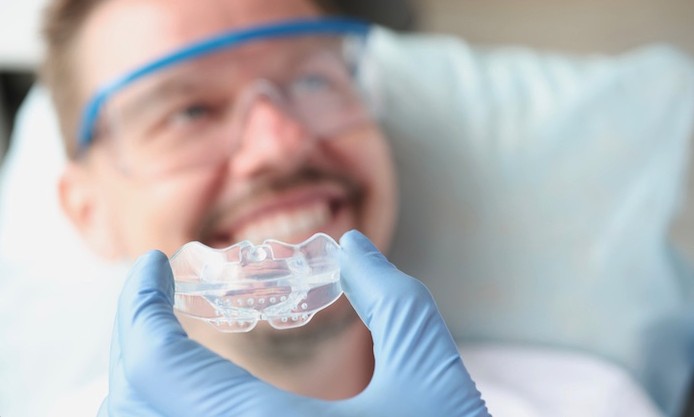
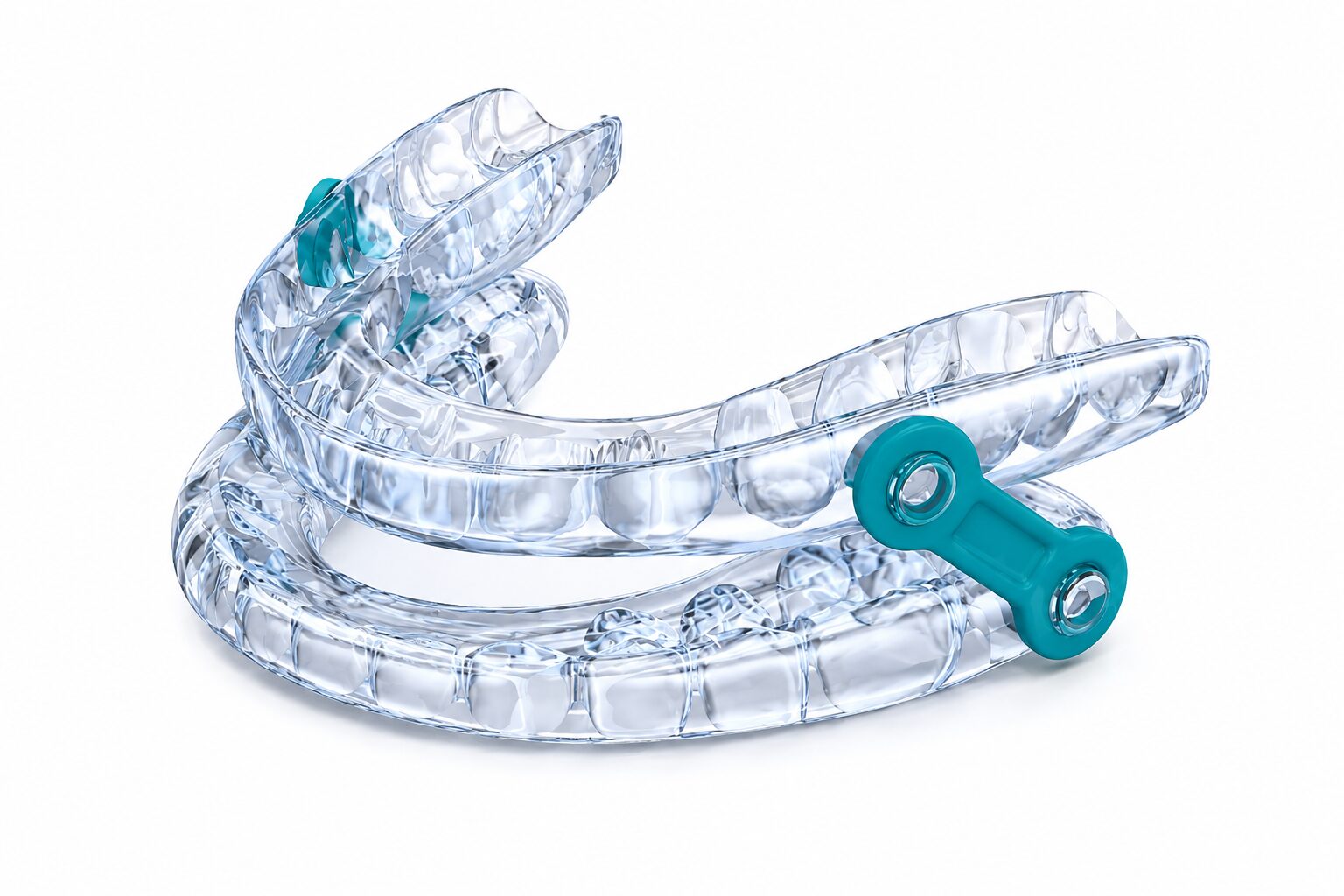
A mandibular advancement device is a custom-made oral appliance that looks similar to a sports mouthguard but works very differently. Two connected trays fit over your upper and lower teeth. The lower tray sits slightly ahead of its natural resting position, which pulls the jaw and tongue forward and creates more space at the back of the throat.
That extra space is the whole point. During sleep, relaxed throat tissue collapses into the airway and blocks airflow, which is what causes the pauses in breathing that define obstructive sleep apnea. Holding the mandible forward keeps that tissue from falling back. The National Heart, Lung, and Blood Institute recognizes oral appliances as an accepted treatment for mild to moderate obstructive sleep apnea, and for patients who cannot tolerate CPAP.
Who Benefits from Oral Appliance Therapy?
We evaluate every patient individually, but a mandibular advancement device tends to work well for people who:

Have been diagnosed with mild or moderate obstructive sleep apnea
Tried CPAP and could not tolerate the mask, pressure, or noise
Travel often and need treatment that fits in a carry-on
Snore loudly enough to disrupt a partner's sleep
Wake up unrefreshed, with morning headaches, or with a dry throat
Patients with severe sleep apnea may still need CPAP, though some use both. Your physician and our team decide that together based on your sleep study results.
Advantages Over CPAP
CPAP remains the gold standard for severe cases, but compliance is the problem it never solved. Many patients stop wearing the mask within the first year. A mandibular advancement device offers a different tradeoff:
- Silent operation. No motor, no airflow noise, no disruption to your partner.
- Portability. The appliance fits in a small case and needs no power source.
- Comfort. Nothing covers your nose or face, so you can sleep in any position.
- Simple upkeep. Brush it, rinse it, store it dry. No tubing or filters to replace.
- Higher compliance. Patients who find CPAP unbearable often wear an oral appliance every night.
What to Expect During Oral Appliance Therapy
Treating sleep apnea with an oral appliance follows a medical process, not a single dental visit. Each step protects your diagnosis, supports your insurance claim, and confirms the appliance is actually working once you start wearing it.
1. Obtain a Physician’s Prescription
Before treatment begins, we may need a prescription or referral from your physician confirming that an oral appliance is appropriate for your sleep apnea care. This documentation also matters later when we submit for insurance.
2. Schedule Your Consultation and Exam
During your visit to our Houston office, we evaluate your airway, teeth, bite, jaw position, and symptoms to determine whether oral appliance therapy is a good fit for you.
3. Complete a Home Sleep Study
A home sleep study may be required to diagnose sleep apnea or to provide updated information about how severe your condition has become. You complete the test in your own bed, not in a lab.
4. Insurance Approval and Medical Records
Our team gathers your sleep study results, physician documentation, and medical records, then requests insurance authorization when applicable. Handling this before fabrication prevents surprise costs.
5. Digital Scan or Dental Impressions
Once treatment is approved, we take precise digital scans or dental impressions of your teeth. These measurements allow the lab to build a mandibular advancement device custom-fitted to your bite.
6. Appliance Delivery and Fitting
When your appliance is ready, you return to the office for delivery and fitting. We adjust the jaw position for comfort and walk you through proper use, cleaning, and care.
7. Follow-Up and Repeat Sleep Testing
Follow-up visits let us check comfort, fit, and symptom improvement. We may recommend a repeat home sleep study to confirm the appliance is effectively treating your sleep apnea.
Patients with severe sleep apnea may still need CPAP, though some use both. Your physician and our team decide that together based on your sleep study results.
Why Houston Patients Choose Dr. Friedberg & Associates
Dr. Jon Robert Friedberg and our team coordinate directly with your physician and sleep specialist, so nothing falls through the cracks between the medical and dental sides of your care. We fabricate appliances through our in-house dental lab, which shortens turnaround time and lets us make adjustments quickly. Patients from Memorial, Spring Branch, the Energy Corridor, and across west Houston have trusted this practice for decades.
If grinding or clenching is your primary concern rather than sleep apnea, ask us about a custom night guard instead.
Frequently Asked Questions
CPAP reduces apnea events more completely, but oral appliances often produce better real-world results because patients actually wear them every night. For mild to moderate sleep apnea, the outcomes are frequently comparable.
Medical insurance, not dental, usually covers oral appliance therapy when a physician has diagnosed obstructive sleep apnea. Coverage varies by plan, and our team requests authorization before we begin fabrication so you know your cost upfront.
Minor bite changes can develop over years of nightly wear. We monitor your bite at every follow-up visit and adjust the appliance when needed to limit those shifts.
Over-the-counter mouthpieces are not calibrated to your airway, your bite, or the severity of your apnea. They can cause jaw pain and tooth movement, and they leave untreated sleep apnea untreated. A device built from your own scans and adjusted by a dentist is the safer route.
Most patients move from consultation to appliance delivery in four to eight weeks. Insurance authorization and sleep study scheduling account for most of that timeline.
Schedule Your Sleep Apnea Consultation in Houston
Untreated sleep apnea raises your risk of high blood pressure, heart disease, and stroke, and it steals your energy every single day. If CPAP has not worked for you, a custom mandibular advancement device may be the answer. Call our Houston office to schedule your consultation.