
Most people who end up needing gum surgery felt “fine” until a dentist measured deep periodontal pockets during periodontal probing or identified bone loss on radiographs or dental X-rays. Periodontal disease and gum disease often progress quietly, especially when biofilm and plaque accumulate below the gumline. That’s why the decision for periodontal surgery is usually based on clinical findings such as probing depth, bleeding on probing, clinical attachment loss, and vertical bone defects — not pain alone.
Dentists and periodontists typically recommend gum surgery when nonsurgical periodontal therapy, including scaling and root planing and deep cleaning, cannot fully control infection, reduce deep pockets, or stop ongoing gum inflammation and bone loss affecting the alveolar bone.
What “Gum Surgery” Means (And When It’s Considered)
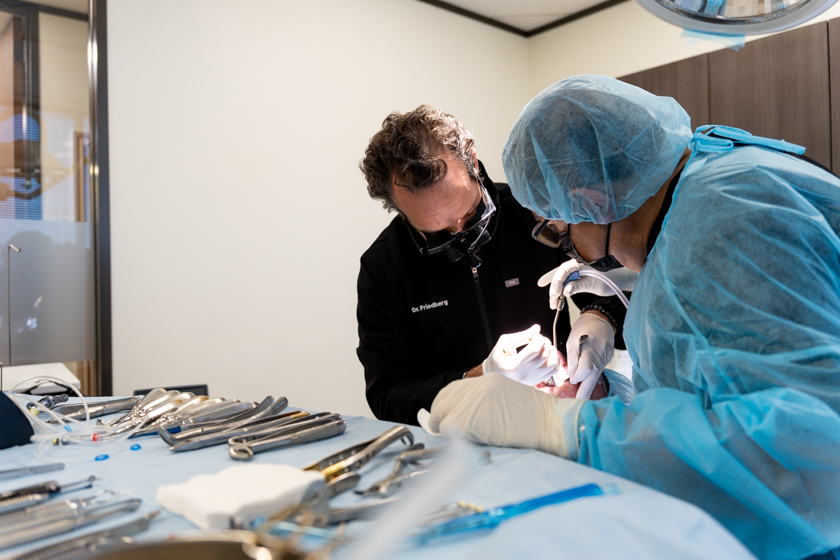
Gum surgery is a group of periodontal surgery procedures used to treat periodontal disease, periodontitis, advanced gingivitis, gum recession, and problems affecting the bone, cementum, and connective tissue that hold teeth in place. It can include pocket reduction surgery, flap surgery, osseous surgery, gingivectomy, gingivoplasty, gum graft surgery, bone grafting, and regenerative periodontal therapy such as guided tissue regeneration.
Nonsurgical periodontal therapy focuses on removing plaque, calculus, and hardened tartar beneath the gumline with scaling and root planing. This deep cleaning procedure reduces bacterial biofilm and infection. Surgery is considered when a dentist or periodontist needs deeper access for debridement or when reconstruction of alveolar bone, attached gingiva, keratinized tissue, or connective tissue is necessary to stabilize teeth long-term.
A general dentist may first identify gingivitis, swollen gums, bleeding gums, or halitosis during a routine periodontal evaluation. Referral to a periodontist becomes common when probing depth increases, periodontal pockets exceed 5–6 mm, bone loss appears on radiographs, recession progresses, or furcation involvement and tooth mobility are present.
Common Goals of Gum Surgery
One major goal is reducing infection and shrinking periodontal pockets so brushing technique, floss, interdental brushes, and even a water flosser can effectively clean the area. If deep pockets remain, bacteria and calculus persist even with good oral hygiene.
Another goal is rebuilding or protecting gum tissue and bone to reduce root exposure, tooth sensitivity, and clinical attachment loss. Gum grafting can increase keratinized tissue and strengthen fragile gums or thin biotype areas. In many cases, success means making the mouth stable and maintainable with periodontal maintenance — not achieving purely cosmetic perfection.
Nonsurgical Options That Are Usually Tried First
For many patients, scaling and root planing combined with improved oral hygiene, soft-bristled toothbrush use, flossing, and interdental cleaning serves as the first-line therapy. Dentists may also prescribe antiseptic support like chlorhexidine rinse to reduce infection and inflammation.
After 4 to 8 weeks, a re-evaluation periodontal exam measures probing depth, bleeding on probing, gum inflammation, and pocket reduction. If periodontal pockets shrink and tissues tighten, surgery may be avoidable. If deep pockets persist, surgical access may be required.
Step-by-Step: Signs and Findings That Often Mean Surgery Is Needed
A common trigger is persistent deep pockets (5–6 mm or deeper) after nonsurgical therapy, especially with ongoing bleeding on probing and signs of infection. Deep periodontal pockets can hide calculus deposits that cannot be fully removed without flap surgery.
Another frequent reason is progressive gum recession with root exposure, thin gums, or fragile gums that increase sensitivity and root cavity risk. When attached gingiva and keratinized tissue are insufficient, gum graft surgery may be necessary.
Periodontists may also recommend surgery when measurable bone loss, worsening clinical attachment loss, vertical bone defects, furcation involvement in molars, or tooth mobility are present. These signs indicate compromise of the tooth’s support system — including alveolar bone and cementum — not just superficial gum inflammation.
Recurrent periodontal abscess, persistent infection, drainage, or swelling between maintenance visits is another major red flag. Chronic infection often means deep pocketing that cleanings alone cannot control.
Symptoms Patients Notice at Home
Patients often report bleeding gums, swollen gums, gum tenderness, bad breath, or teeth appearing longer due to receding gums. These are classic signs of periodontal disease.
Tooth sensitivity near the gumline may indicate root exposure from gum recession or thinning gingiva. Discomfort during brushing — especially if aggressive brushing technique or vaping habits are present — may worsen recession.
What a Dentist or Periodontist Measures
A periodontal evaluation includes periodontal probing at multiple points around each tooth to measure probing depth and record bleeding on probing. Clinicians also calculate clinical attachment loss and evaluate furcation involvement and tooth mobility.
Radiographs or dental X-rays assess alveolar bone levels and identify vertical bone defects suitable for regenerative periodontal therapy. Periodontal charting documents recession, attached gingiva, keratinized tissue width, and mobility grading.
Which Procedure Fits Which Problem?
The correct periodontal surgery depends on diagnosis.
Recession problems may require gum grafting such as connective tissue graft, free gingival graft, or pedicle graft. Infection-driven deep pockets often require flap surgery, osseous surgery, or pocket reduction surgery. Bone defects may benefit from regenerative periodontal therapy using bone grafting, barrier membrane placement, enamel matrix derivative, or collagen matrix products.
Surgery is rarely cosmetic alone. The primary objective is infection control and stabilization so periodontal maintenance can protect results long-term.
Gum Graft Surgery (For Recession and Thin Tissue)
Periodontists recommend gum graft surgery when gum recession exposes roots, attached gingiva is inadequate, gums are thin or fragile, or clinical attachment loss is progressing.
Common options include:
- Connective tissue graft
- Free gingival graft
- Pedicle graft
- Allograft materials
Some procedures use collagen matrix substitutes to reduce donor site discomfort.
If you’re comparing options for tissue thickening and root coverage, you can read more about periodontal plastic and gum-rebuilding procedures.
Flap Surgery (Pocket Reduction) and Deep Cleaning Access
Flap surgery allows the periodontist to reflect gum tissue and perform direct debridement of deep pockets and root planing under direct visibility. During the procedure, the periodontist can also perform osseous surgery to reshape bone irregularities.
Pocket reduction surgery reduces probing depth so future periodontal maintenance can keep areas stable.
Regenerative Procedures (When Bone Support Is Lost)
Regenerative periodontal therapy may include bone grafting, guided tissue regeneration with barrier membrane placement, enamel matrix derivative application, or bone graft materials to rebuild alveolar bone support.
If your plan includes grafting, you can review more about bone grafting procedures and typical healing timelines.
What Happens If You Delay Treatment?
Periodontal disease progresses in stages. Delayed care can allow deep pockets to worsen, infection to persist, and alveolar bone to resorb further, increasing tooth loss risk.
Recession may continue, exposing cementum and increasing sensitivity and root cavity risk. Chronic inflammation can also lead to repeated periodontal abscess flare-ups.
When It Becomes “Medically Necessary”
Gum surgery becomes medically necessary when it treats infection, prevents progressive bone loss, stabilizes tooth mobility, or manages uncontrolled periodontitis.
Documentation includes periodontal charting, radiographs, failed scaling and root planing response, and persistent bleeding on probing.
If the dentist or periodontist cannot stabilize a tooth, they may discuss tooth extraction procedures here:
How to Prepare, Recover, and Avoid Common Mistakes
Preparation includes medical history review, diabetes evaluation, smoking or vaping assessment, and medication screening. Dentists commonly use local anesthesia and may offer sedation dentistry for complex procedures.
Recovery may involve mild swelling, sutures, chlorhexidine rinse, NSAIDs for discomfort, and detailed post-op instructions. Follow-up appointments may include suture removal and measurement of improved probing depth.
Long-term stability requires periodontal maintenance visits more frequently than routine cleanings, along with consistent oral hygiene using floss, interdental brushes, and a soft-bristled toothbrush.
When to Get a Second Opinion or Specialist Consult
Seek a second opinion when advanced bone loss affects the area, furcation involvement compromises the tooth, or a dentist or periodontist recommends multiple procedures like osseous surgery, gingivectomy, or regenerative periodontal therapy.
Ask for your periodontal chart, radiographs, and written treatment plan.
Patients sometimes also review other oral surgery options such as wisdom teeth extraction or tori removal procedures if anatomical factors complicate hygiene.
FAQ: Gum Surgery Necessity and Next Steps
How do I know if I need gum surgery?
You may need gum surgery if deep periodontal pockets, gum recession, bone loss, or infection persist after scaling and root planing. Measurements like probing depth, bleeding on probing, and clinical attachment loss guide the decision.
What happens if you don’t get gum surgery?
Untreated periodontitis can lead to deeper pockets, more alveolar bone loss, tooth mobility, periodontal abscess, and tooth loss.
What is considered medically necessary oral surgery?
Medically necessary oral surgery includes procedures required to treat infection, stop progressive bone loss, restore function, or prevent tooth loss.
Is gum surgery really necessary?
When deep pockets and infection persist despite nonsurgical periodontal therapy, surgery may be the most predictable way to stabilize teeth.Educational resources like American Academy of Periodontology gum treatment information can provide additional background.