
Most “failed dental implant” second-opinion visits in Houston are not about a defective implant at all. They are about peri-implantitis that took hold because periodontal disease and gum disease were never fully treated and stabilized before the implant was placed.
Dental implant failure is fixable in many cases, but timing matters. The earlier you identify the warning signs and get a clear diagnosis, the more options you usually have for implant salvage instead of full implant revision.
What “Dental Implant Failure” Means (And What It Doesn’t)
A dental implant failure means something in the implant system is no longer stable, healthy, or functional. That can look like implant mobility, progressive bone loss, chronic infection, or a breakdown in how the implant crown functions or looks.
It does not automatically mean “the implant is ruined” or “your body rejected it.” Many problems involve the abutment, the abutment screw, the crown, or the surrounding gum and bone, and each one has a different fix.
Normal healing includes soreness, mild swelling, and tenderness when chewing for a short period after surgery. Red flags are persistent pain, increasing pain, swelling that worsens after the first few days, redness of the gums that spreads, or any feeling that the implant feels loose or unstable.
Failure can involve different parts of the system. A loose crown may be a simple mechanical issue, while bone loss around the implant points to a biological problem like peri-implantitis.
Early vs Late Implant Failure
Early implant failure usually happens in the first few weeks to a few months. The most common drivers are lack of osseointegration, early infection, or excessive micromovement that prevents the implant from bonding to bone.
Late implant failure happens months to years later. The common culprits are peri-implantitis, occlusal overload from bite forces, implant fracture, or systemic risk factors that make infection and inflammation harder to control.
A Loose Crown Isn’t Always a Failed Implant
A loose crown can come from a loosened abutment screw or a worn connection, even if the implant fixture in the bone is solid. That is very different from a loose implant where the entire fixture moves because osseointegration failed or bone loss progressed.
Quick evaluation matters because the fix may be simple. If you ignore it and keep chewing on it, you can turn a manageable mechanical problem into progressive bone loss and a true failed implant.
Warning Signs You Shouldn’t Ignore
Patients dealing with a Failed Dental Implant Houston case usually describe the same cluster of symptoms. The most common include persistent pain, increasing pain, swelling, bleeding when brushing, bad taste, bad breath, gum recession, and gum inflammation around the implant.
Functional changes are just as important as pain. Difficulty chewing, trouble when you chew or bite, bite changes, pressure sensitivity, or food trapping around the implant can signal a problem with the crown design, the bite, or the health of the tissues.
Mechanical signs should always be taken seriously. Movement or looseness, clicking, and crown or bridge instability can indicate anything from a loose crown to implant mobility that requires urgent care.
What It Feels Like When an Implant Is Failing
A failing implant can feel like a deep ache that does not settle down. Some people describe throbbing, pressure, tenderness when biting, or a “spongy” feeling in the gum tissue near the implant.
Not every infection hurts early on. Peri-implantitis can be painless until there is significant bone loss, which is why bleeding on probing, suppuration, and gum recession matter even when pain is mild.
When to Seek Same-Week Care
Same-week evaluation is smart if you notice pus, visible suppuration, fever, rapidly increasing swelling, sudden mobility, or severe pain after the initial post-op window. Those signs can point to a spreading infection or a breakdown of the supporting bone.
Delaying care can shrink your options. Infection progression and bone loss can reduce the chance of implant salvage and increase the need for bone grafting or more complex reconstruction.
Most Common Causes (With a Houston Second-Opinion Lens)
Understanding the causes behind a Failed Dental Implant Houston case starts with identifying the underlying problem. The most common late cause we see is peri-implantitis tied to chronic infection around the implant. It starts with bacterial plaque and biofilm that inflame the tissues, then gradually destroy supporting bone.
Many patients seeking a second opinion had untreated periodontal disease before implant placement.
Active gum disease increases the risk of peri-implantitis later. That risk remains even when the implant surgery goes well.
Other major causes still matter and often overlap. These include lack of osseointegration, insufficient jawbone, smoking, uncontrolled diabetes, poor oral hygiene, and overload from bite forces.
Peri-Implantitis: The #1 Late-Failure Driver
Bacterial biofilm causes peri-implantitis, an inflammatory disease that affects tissues around implants. Patients who want to better understand how dental implants work can review educational information from the American Dental Association.
The tissues become inflamed, pockets deepen, and bleeding often occurs during brushing. Over time, crestal bone loss can expose implant threads and weaken implant support.
There is also a strong connection between gum disease and peri-implantitis. Dentists should treat and stabilize periodontal disease before implant placement. Otherwise, harmful bacterial plaque can spread to the implant environment and increase the risk of peri-implantitis.
Mechanical and Planning Factors
Implant malpositioning or implant malposition can make cleaning nearly impossible. An implant placed too far toward the tongue or cheek, or an over-contoured crown, makes plaque control more difficult and increases the risk of inflammation.
Prosthetic design and bite forces also matter. Occlusal overload from a heavy bite or bruxism can loosen screws, crack restorations, and in some cases contribute to bone loss or implant fracture.
How Dentists Diagnose a Failing Implant
A proper diagnosis of a Failed Dental Implant Houston case starts with a clinical exam of both the implant and the surrounding tissues. That includes checking probing depths, bleeding on probing, suppuration, redness of the gums, gum recession, and signs of gum inflammation.
Mobility testing is critical because it changes the treatment plan. A stable implant with infection may be treatable, while true implant mobility often points to failure of integration or advanced bone loss.
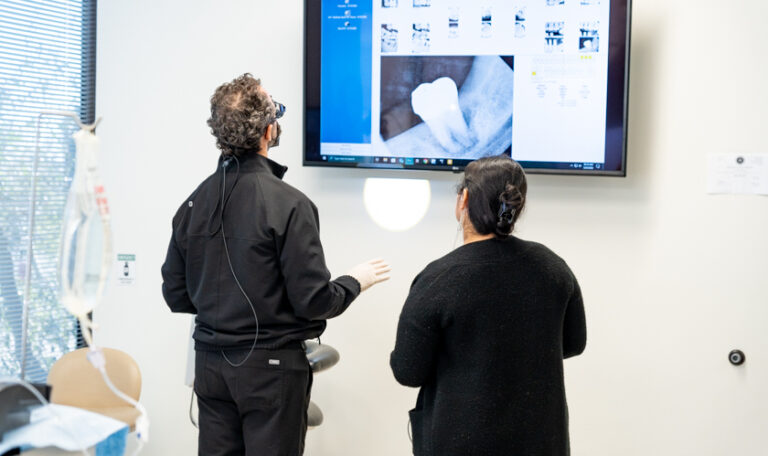
Imaging confirms what the exam suggests. Periapical X-rays show bone levels and thread exposure, while a CBCT scan can map the defect shape, available bone, and nearby anatomy for planning implant revision or bone grafting.
Bite evaluation should not be skipped. Identifying occlusal overload, bite changes, and parafunction like bruxism can prevent repeating the same problem after treatment and improve the long-term outcome of a Failed Dental Implant Houston case.
Key Questions to Ask at a Houston Evaluation
Ask whether periodontal disease was treated and stabilized before placement, and what the implant maintenance plan looks like going forward. Long-term success often depends on periodontal maintenance, not just the initial surgery.
Ask whether this looks biological, mechanical, or both. A clear answer should separate infection and bone loss from issues like a loose crown, a loose abutment screw, or a crown that is simply out of bite.
Why “Watch and Wait” Can Backfire
Small infections around implants rarely stay small. A chronic infection fueled by biofilm can quietly progress into significant bone loss, making future repair more complex.
Earlier intervention can improve the odds of saving the implant. It can also reduce how much grafting is needed if an implant must be removed and replaced.
How a Failed Dental Implant Is Fixed (Step by Step)
Fixing a failed dental implant depends on three things: whether the implant is stable, how much bone loss is present, and whether active infection is present. Your plan should also address risk factors like smoking, diabetes control, bruxism, and daily hygiene, because those are part of the “fix,” not optional add-ons.
Most treatment pathways fall into three categories. They include non-surgical implant decontamination and deep cleaning, surgical peri-implantitis therapy with access and possible grafting, or removing and replacing the implant after the site is healthy.
If you want a clear overview of typical treatment routes, see this breakdown of options for patients dealing with implant complications: steps clinicians use to correct a failing implant. It pairs well with a second-opinion visit because it explains why the same symptom can lead to different solutions.
If the Implant Is Stable but Infected
When the implant is stable, the focus is infection control and stopping bone loss. Treatment may include deep cleaning and debridement around the implant, antimicrobial protocols, and implant decontamination to disrupt bacterial plaque and biofilm.
Some cases need surgical access to clean the implant surface properly. Depending on the defect type, bone grafting may be considered to rebuild lost support and improve long-term stability.
If the Implant Is Loose or Not Integrated
If the implant is loose, it usually cannot be “tightened” back into the bone. Removal is often the safest path, followed by thorough debridement of the site and a healing period. This is often the first step in treating a Failed Dental Implant Houston case.
Next comes a bone evaluation to plan for replacement. Ridge preservation at the time of removal or staged bone grafting later can rebuild insufficient jawbone so a new implant has a better foundation.
In severe bone loss cases, some patients may be candidates for advanced solutions such as zygomatic implants. Those are specialized and case-dependent, but they can be an option when traditional implant sites lack adequate bone.
If It’s a Mechanical Failure (Not Biological)
Mechanical problems can often be fixed without removing the implant. That may mean tightening or replacing the abutment screw, replacing a worn abutment, remaking a loose crown, or adjusting the bite to reduce occlusal overload.
If bruxism is part of the picture, a night guard can protect the implant components and the opposing teeth. Even with an obvious mechanical issue, the clinician should still rule out peri-implantitis so an infection is not being missed.
For a deeper look at how clinicians approach implant salvage versus replacement, this page explains common repair scenarios and decision points: what implant revision and salvage can involve.
Common Mistakes That Make Implant Problems Worse
At-Home Habits That Matter
Daily plaque control is non-negotiable, especially around implants and under bridges. Use implant-safe tools recommended by your clinician, and make sure you can clean the contours of the crown instead of packing food around it.
Risk factors deserve real attention. Avoid smoking, manage diabetes with your physician, address dry mouth if present, and wear a night guard if clenching or grinding is part of your routine.
If you are unsure whether your pain level is normal after surgery versus a sign of trouble, this explanation of typical post-op discomfort can help you gauge what warrants a check-in: what patients usually feel after implant surgery.
Choosing the Right Provider for Salvage
Look for a provider who treats the root cause, not just the loose part. A periodontist who routinely manages peri-implantitis and gum disease can be especially helpful when the problem is biological and tied to inflammation and bone loss.
Ask what diagnostics they use and how they prevent recurrence. You want to hear specifics like probing, bleeding on probing records, X-rays, CBCT, bite evaluation, and a structured maintenance plan.
What to Expect in a Houston Implant Salvage or Revision Visit
A typical second-opinion visit for a Failed Dental Implant Houston case starts with your history and a symptom timeline. Your periodontist will evaluate the gums, measure probing depths, check implant mobility, and review diagnostic imaging. A CBCT scan may help map bone levels and nearby anatomy. It provides more detail when standard imaging cannot show the full picture.
This evaluation helps determine whether the implant can be saved. In some cases, replacement offers the better long-term solution. The findings also guide treatment planning and help identify the underlying cause of failure.
You should leave with a staged treatment plan. Dentists usually address infection first and then move to repair or replacement. Bone grafting, ridge preservation, or component replacement may affect the treatment timeline.
Treatment costs depend on the diagnostics and procedures required. Imaging, surgical therapy, grafting, and replacement components such as abutments or crowns can all influence the final cost. If you are deciding between keeping or replacing an implant, your provider should clearly explain the reasons behind each recommendation.
Are you still deciding whether an implant is the right long-term replacement option? This overview explains why many patients choose implants instead of other tooth replacement methods.: reasons patients choose implants to replace a missing tooth. It is useful context when a revision is on the table.
Local, Practical Considerations in the Houston Area
Plan for multiple visits if you are treating peri-implantitis or doing implant revision. Follow-ups matter because tissue response and home care changes need to be verified, not assumed.
Convenience affects compliance, so choose a location that fits your routine. Patients commonly search by neighborhood or commute patterns, including the Inner Loop, West Houston, Memorial, The Heights, Sugar Land, Katy, Pearland, and nearby areas.
Outcome Goals: Save vs Replace
Saving an implant is most realistic when the implant is stable, bone loss is manageable, and infection is controllable with consistent maintenance. The goal is to stop progression, reduce pocketing, and restore a cleansable, functional restoration.
Replacement is often safer when there is mobility, severe bone loss, implant fracture, or persistent infection that does not respond to therapy. In those cases, removing the implant, rebuilding the site, and placing a new implant in healthier conditions can be the more predictable route.
FAQs About Failed Dental Implants
Q: How do they fix a failed dental implant?
They match the fix to the cause. That can mean tightening or replacing components (abutment, abutment screw, or crown), treating peri-implantitis with deep cleaning, debridement, and implant decontamination, or removing the implant and rebuilding bone with ridge preservation or bone grafting before replacement.
Bite forces can contribute to implant failure. Dentists often correct occlusal overload and recommend a night guard to manage bruxism.
Q: What is the most common cause of dental implant failure?
Peri-implantitis is the leading cause of most late implant failures. Bacterial plaque and biofilm drive this infection. Untreated or unstable gum disease often increases the risk.
Q: What does it feel like when a dental implant fails?
Symptoms vary from person to person. Common signs include persistent pain, increasing pain, pressure when biting, swelling, bleeding when brushing, gum recession, and a bad taste. Some people also notice clicking, bite changes, difficulty chewing, or implant looseness.
Not every failing implant causes severe pain. Some peri-implantitis cases progress quietly. Bleeding and persistent odor may signal advancing bone loss and should not be ignored.
Q: Is the dentist responsible for a failed implant?
Sometimes technique, planning, or implant positioning contributes to failure. A second opinion can help identify those issues.
Biological and lifestyle factors also play a major role. Common risk factors include periodontal disease, smoking, diabetes, poor oral hygiene, and heavy bite forces.
A fair evaluation examines both the treatment history and the patient’s health. It should consider factors that affect long-term implant success and maintenance.
Ready for a Clear Second Opinion in Houston?
If your implant hurts, bleeds, swells, or feels loose, schedule an evaluation as soon as possible. A thorough exam can identify infection, bone loss, or mechanical complications.
A periodontist-led evaluation can detect peri-implantitis early. It can also measure bone loss and determine whether the implant can be saved.
If you are dealing with a possible Failed Dental Implant Houston issue, bring any previous X-rays and implant records to your consultation.
The goal is straightforward. Stop the problem from progressing and restore a stable, comfortable bite.