
If you’re considering dental implants, one of the first questions that usually comes up is how long the process actually takes. Understanding the dental implant timeline helps reduce uncertainty and makes it easier to plan ahead. While dental implants are not a one-day procedure, each phase plays a role in creating a stable, long-lasting result.
Below is a clear, step-by-step look at what most patients can expect, from the first appointment to the final crown.
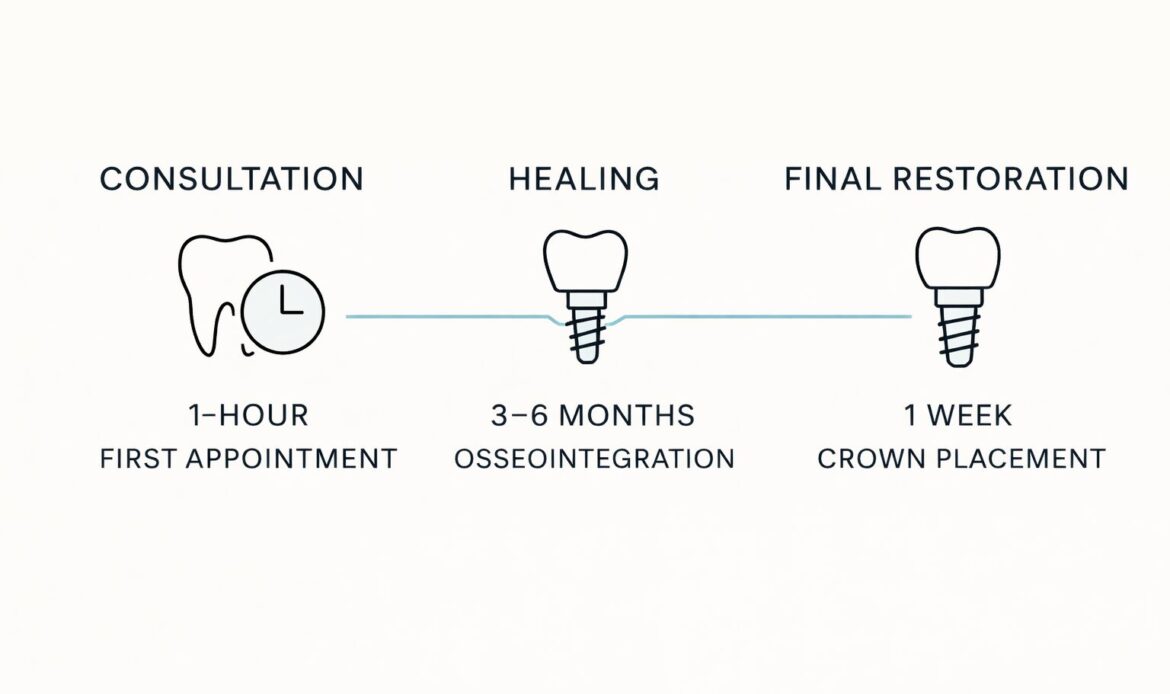
Why the dental implant timeline takes time
Dental implants function like natural tooth roots. Because the implant must fuse with the jawbone, the overall timeline includes healing phases that cannot be rushed. Although the process may feel long at first, each stage supports comfort, stability, and long-term success.
For that reason, careful planning helps protect both your oral health and the final outcome.
Initial consultation and treatment planning
The dental implant process begins with a comprehensive evaluation. During this visit, the doctor performs a clinical exam and uses advanced imaging to assess bone quality, gum health, and surrounding teeth.
At this stage, your doctor determines:
- Whether implants are appropriate for you
- If additional procedures, such as bone grafting, are needed
- Which type of implant restoration fits your situation
As a result, this visit establishes the foundation for your personalized treatment plan and overall timeline.
During this visit, patients often review the full scope of care involved, including options outlined in a dental implant treatment overview, to better understand each phase of treatment.
Tooth extraction during the implant process
If a damaged or failing tooth is still present, it may need to be removed before implant placement. In some cases, the dentist coordinates extraction and implant placement closely together. In other situations, allowing time for healing supports better results.
Typically, healing after extraction takes several weeks. However, the exact timing depends on the condition of the bone and gums and how your body responds.
Bone grafting and healing before implant placement
Not every patient needs bone grafting. However, when the jawbone cannot adequately support an implant, bone grafting becomes an important step in the dental implant timeline. If required, healing often takes a few months.
Although this phase can extend the process, it strengthens the foundation and improves long-term stability.
Implant placement and healing phase
Once the jawbone is ready, the dentist places the dental implant into the bone. Most patients tolerate this procedure well, and discomfort is usually minimal.
After placement, the implant integrates with the bone through a process called osseointegration. This healing phase typically lasts three to six months and plays a key role in long-term implant success.
This healing phase follows a clinically established sequence that aligns with guidance outlined in a dental implant process reference from trusted dental education sources.
Abutment placement
After the implant fully integrates, the dentist attaches a small connector called an abutment. This component allows the final crown to sit securely on the implant.
Following abutment placement, the gums usually need a short healing period before the final restoration.
Final crown placement and completion of the timeline
The final step involves placing the custom crown. The crown is designed to match your natural teeth in shape and color, restoring normal function and appearance.
Once this step is complete, the dental implant timeline concludes, and you can use your tooth like a natural one.
How long does the full dental implant timeline take?
In straightforward cases, the full process may take several months. More complex cases that involve extractions or bone grafting can take longer. Even so, this pacing allows proper healing and long-term success.
Many patients find it helpful to review treatment costs and planning considerations early, especially when multiple steps are involved.
What factors can affect implant timing?
Every patient’s situation is different. Several factors can influence how long the implant process takes, including:
- Bone density and healing response
- Gum health
- Smoking or certain medical conditions
- The number of implants being placed
Because of these variables, your provider will explain how each factor applies to your specific plan.
A thoughtful approach leads to better results
Dental implants focus on precision rather than speed. By understanding the dental implant timeline, you can feel prepared and confident as you consider treatment.
If you’d like guidance tailored to your situation, scheduling a consultation is a helpful next step.
Dental Implant Timeline FAQs
How long does a dental implant timeline usually last?
Most cases take several months from the first visit to the final crown. Healing time and additional procedures can affect the total duration.
Why does healing take several months?
Healing allows the implant to integrate with the jawbone. This process supports stability and reduces the risk of complications.
Will I have a temporary tooth during healing?
Many patients receive a temporary solution while healing takes place. Your dentist will explain available options based on your needs.
Does everyone need bone grafting?
No. Bone grafting depends on bone density and oral health, which imaging evaluates during the consultation.