
After implant surgery, normal healing should feel better week by week — not worse. That trend line is the single most useful way to tell normal recovery from early implant failure. Soreness that fades is expected. Pain, swelling, or bleeding that climbs, or an implant that moves, needs an exam.
We’re Houston periodontists, and we see worried patients every week — many with implants placed at other offices. Most of the time, the “failing implant” turns out to be normal healing or a fixable mechanical issue like a loose abutment screw. True implant failure is uncommon, but when it happens, catching it early makes the difference between saving the implant and replacing it.
This article is general education, not a diagnosis. Only a clinical exam and imaging can confirm what’s happening with your implant.
What Normal Healing Feels Like
Implant recovery runs on two tracks, and knowing them helps you rule out implant failure. Your gums heal on the surface within a couple of weeks. Underneath, the bone fuses to the implant through a slower process called osseointegration, which continues for weeks to months. Your gums can look perfectly fine while the bone is still maturing.
In the first 24–72 hours, expect swelling that peaks around day two or three, plus tenderness, bruising, and minor oozing around the sutures. This is the roughest window, and it’s normal. If you’re unsure what counts as normal soreness, we cover it in detail in our guide to pain after getting a dental implant.
In weeks one and two, the gums should look less puffy and bleed less when you clean. Pain becomes intermittent and mild rather than constant. A feeling of “tightness” as tissue knits together is normal.
Over the following weeks to months, most patients feel nothing unusual while osseointegration finishes. Follow-up visits matter during this phase — we confirm stability before placing the final crown, especially after bone grafting or a sinus lift, which extend the timeline.
Warning Signs of Implant Failure
Implant failure rarely announces itself dramatically. We look for patterns that point to infection, bone loss, or a breakdown in osseointegration:
Pain that worsens instead of fading. Discomfort should trend downward. Pain that persists past the normal healing window, intensifies, or returns strongly after you were improving deserves an exam. Sometimes the culprit is bite overload rather than the implant itself, which is why we check your occlusion carefully.
Swelling, redness, or bleeding that won’t resolve. Gum inflammation around an implant can start mild and progress quietly if plaque stays trapped below the gumline.
Pus, drainage, or a bad taste. A foul or metallic taste, or a pimple-like bump on the gum near the implant, suggests infection. Call promptly — infection around an implant can move faster than it does around a natural tooth.
Gum recession exposing metal. If the implant or abutment becomes visible at the gumline, the tissue and possibly the bone are pulling away.
A loose or rocking implant. Any movement is urgent until proven otherwise. Sometimes it’s only a loose abutment screw or crown, which we can fix easily. But movement of the implant body itself signals lost osseointegration.
Here’s something most articles get wrong: an implant losing bone often doesn’t feel loose until the damage is advanced. The American Academy of Periodontology notes that peri-implant disease can quietly destroy supporting bone while the implant still feels solid. That’s why bleeding and swelling matter — they’re the early alarm, not looseness.
Normal vs. Concerning: Quick Comparison
| Symptom | Normal pattern | Concerning pattern | What to do |
|---|---|---|---|
| Pain | Improves daily, then weekly | Persists, worsens, or returns after improving | Schedule an evaluation and bite check |
| Swelling | Peaks by day 2–3, then shrinks | Lingers, spreads, or grows | Same-day call if it’s expanding |
| Bleeding | Minor early on, then fades | Ongoing bleeding with red, puffy gums | Book an exam |
| Bad taste / pus | None after the first days | Foul taste, drainage, gum bump | Call promptly — likely infection |
| Stability | Feels solid at all times | Any movement or rocking | Urgent until assessed — don’t wiggle it |
Call the same day if the implant moves, your bite suddenly changes, or a crown feels unstable. Seek urgent care for fever, spreading facial swelling, or difficulty swallowing — those can signal an infection that is spreading.
Why Implants Fail
Peri-implantitis is the number one cause. It starts as peri-implant mucositis — inflammation limited to the gum tissue, which is usually reversible with professional cleaning and better home care. Left untreated, it can progress to peri-implantitis, where bacteria destroy the bone supporting the implant. The European Federation of Periodontology has a good patient overview of how peri-implant disease is treated. A history of gum disease raises your risk, which is why periodontal patients need closer implant monitoring.
Failed osseointegration causes most early implant failure — the bone never bonds to the implant in the first few months. Insufficient bone volume, infection at placement, or movement during healing can all interfere.
Bite forces matter more than most people realize. Clenching, grinding (bruxism), or a crown that sits high can overload an implant, loosen screws, and stress the bone. A night guard often solves this.
Health factors and medications. Smoking impairs blood flow and healing — if you’re working on quitting, Smokefree.gov has free support. Uncontrolled diabetes slows tissue repair. Bisphosphonate medications for osteoporosis (like Fosamax, Actonel, or Boniva) and certain antidepressants can affect bone metabolism and osseointegration. Always give your implant provider a complete medication list.
Early vs. Late Implant Failure
Early failure happens in the first months, when integration never establishes — usually showing up as persistent pain, swelling, or mobility. Late implant failure happens after years of stable function, and peri-implantitis, gradual bone loss, or long-term overload most often causes it. Both are treatable, but the playbook differs, which is why diagnosis comes first.
Can a Failing Implant Be Saved?
Often, yes — the earlier we catch implant failure, the more options exist. Our approach:
Mechanical problems — a loose abutment screw, an ill-fitting crown, a high bite — are usually straightforward: tighten, remake, or adjust, plus a night guard if grinding is involved.
Peri-implant mucositis typically responds to professional cleaning, improved home care, and short-term antiseptic protocols. Caught at this stage, it’s reversible.
Peri-implantitis requires deeper treatment. In our practice, one option is the LAPIP laser protocol, a minimally invasive treatment that targets infected tissue around the implant while preserving healthy structure. We explain how it works on our failing dental implants page.
When the implant can’t be saved — significant mobility, uncontrollable infection, or advanced bone loss — removal is the healthiest path. That’s not the end of the road. We plan the next step at the same time: typically removal, a healing period, often a bone graft to rebuild the site, then a replacement implant. Our page on fixing failed dental implants walks through repair and replacement options, and our bone grafting overview explains how we rebuild lost support.
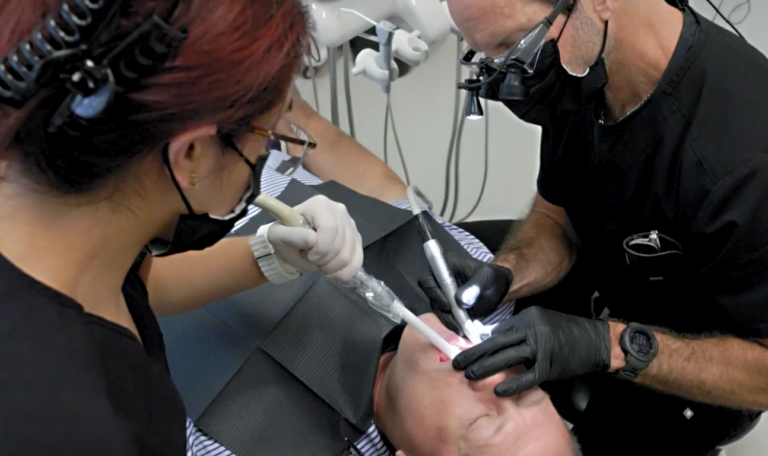
Every evaluation starts the same way: a clinical exam, probing measurements around the implant, an occlusion check, and imaging — including CBCT 3D scans when we need to see bone levels precisely.
Protecting Your Implant Long Term
Implants can last decades, but they aren’t “set it and forget it.” Brush gently along the gumline, clean between teeth daily, and use the implant-safe tools we recommend. Keep your professional cleaning and monitoring visits — we track bleeding, pocket depths, and bone levels so small changes never become implant failure. Our guide to caring for your dental implants covers the full routine.
If you’ve had gum disease before, expect a closer follow-up schedule. Implants are less resistant to infection than natural teeth, so prevention is the whole game.
FAQ: Implant Healing and Failure
How do I know if my dental implant is healing correctly?
Pain and swelling should trend downward, gums should look progressively calmer, and the implant should feel completely solid. If symptoms persist, worsen, or return after improving, get examined — an exam and X-rays can separate normal healing from early implant failure.
How do I know if my dental implant has failed?
The clearest signs are implant mobility, worsening or persistent pain, swelling or bleeding that won’t resolve, and pus or a bad taste. But bone loss can also progress silently, so don’t wait for looseness. Only a clinical exam and imaging can confirm implant failure.
Is my body rejecting the implant?
True rejection of titanium is rare. What patients call “rejection” is almost always infection, inflammation, or failed integration — and most of those causes are treatable, especially early.
Can a failed dental implant be replaced?
Usually, yes. The typical path is removal, healing, bone grafting if the site lost support, then a new implant. Replacement implants have strong success rates when we address the underlying cause first — infection, bite overload, or health factors.
Worried About Your Implant? Get It Checked — Even If It Was Placed Elsewhere
If you can’t decide whether this is normal healing or something worse, we’d rather examine you than leave you worrying at home. Dr. Friedberg is a board-certified periodontist in Houston with 20+ years of implant experience, and we regularly evaluate implants that other offices placed — no referral needed.
A focused exam with CBCT imaging tells us whether you’re looking at normal healing, a simple mechanical fix, treatable inflammation, or true implant failure with a clear plan to correct it. Contact Dr. Friedberg & Associates to schedule an implant evaluation.